Structured practice
Courses are offered as they are published. Each lesson gives you a defined place to put your attention, with the explanation, listening material and practice it includes.

The Get British Accent app has not opened to the public yet. This site describes how practice in the app works.
Do you repeat yourself on calls, rehearse simple sentences, or hold back in meetings? Work on clearer British-English pronunciation with structured practice, recordings to listen back to, and optional human coaching.
The app at app.getbritishaccent.com has not opened to the public yet.Creating an account is free. Courses are offered as they are published. Recording is not switched on in the app yet. Coaching is optional.

A lawyer preparing for a client call. An analyst presenting to a regional team. An engineer introducing a proposal to colleagues in three time zones.
When you are thinking about pronunciation as well as the point you want to make, speaking can take extra preparation. Get British Accent gives that preparation a structure: lessons as they are published, a record of your practice, and optional coaching for the phrases you want to work on.
Courses are offered as they are published. Each lesson gives you a defined place to put your attention, with the explanation, listening material and practice it includes.
Record your attempts in the app and listen back. They stay in your history until you delete them or the app’s retention period ends.
Recording is not switched on in the app yet.
When you want another pair of ears, browse coaches from workspaces the platform has approved and request a session at the times they publish.
No coaches are listed in the app yet.
The app has not opened to the public yet.

“Sorry, could you say that again?”
Sometimes it is a poor connection. Sometimes it is an unfamiliar word. Sometimes you wonder whether the way you said it got in the way. When it happens often, the uncertainty can follow you into the next conversation.
You repeat the phrase. Reword it. Check their expression. By the time the conversation moves on, you may still be thinking about it. Take a phrase like it into practice: say it aloud and choose one thing to try differently.
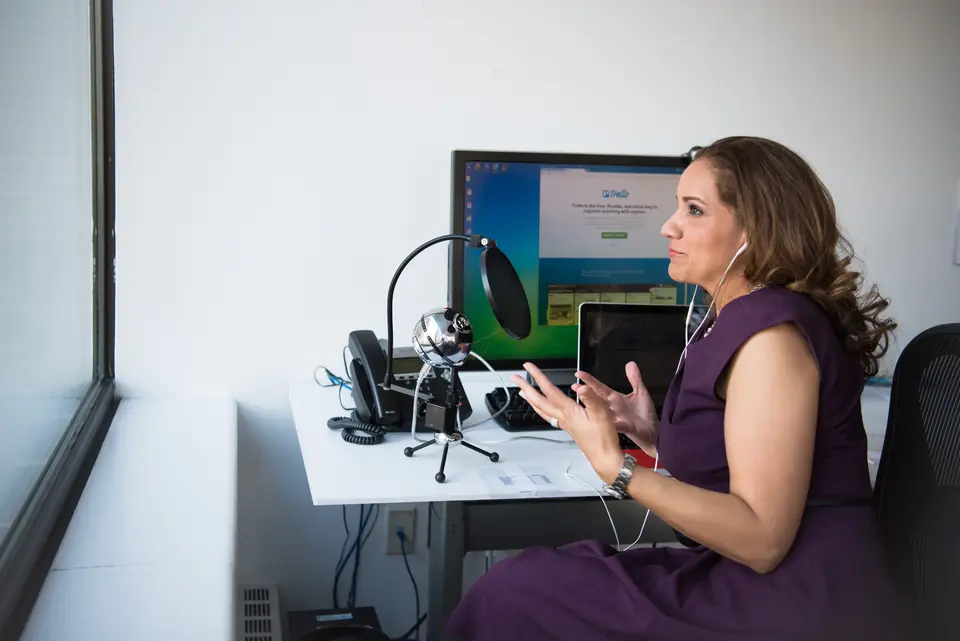
Without the room around you, a name, a number or an important detail can take extra effort to communicate. Practise with the kinds of sentences you want to feel more comfortable saying aloud.
You can know your material and still feel uneasy about delivering it. Make room in your preparation to hear your words, notice a difficult phrase and try it again.

Introducing yourself. Asking a question. Joining a conversation with colleagues. You may want those everyday exchanges to take less mental rehearsal, too.
The app has not opened to the public yet.
Your voice does not determine your intelligence, expertise or value. Choosing to practise British-English pronunciation is a personal goal. It is not a requirement to deserve a hearing.
You might want clearer everyday speech, more control over particular sounds, or greater familiarity with British-English pronunciation. Choose the goal that matters to you. Keep your identity in the conversation.
There are many British accents. This is a place to work on British-English pronunciation, rather than a promise to make everyone sound identical. Where a lesson includes listening material, use it to hear the pronunciation it models.

A conversation can leave you with a feeling, but no clear next step. A recording gives you something concrete: listen to the phrase, notice what you want to work on and try it again.
The app at app.getbritishaccent.com has not opened to the public yet.The baseline assessment is free when published. It is a starting exercise, not an expert diagnosis, and the app does not score your pronunciation automatically. Recording is not switched on in the app yet.

Get British Accent brings these activities into a structured practice journey. Work through available lessons, make attempts and return to your recordings over time.
Recording is not switched on in the app yet, so attempts cannot be recorded or played back for now.
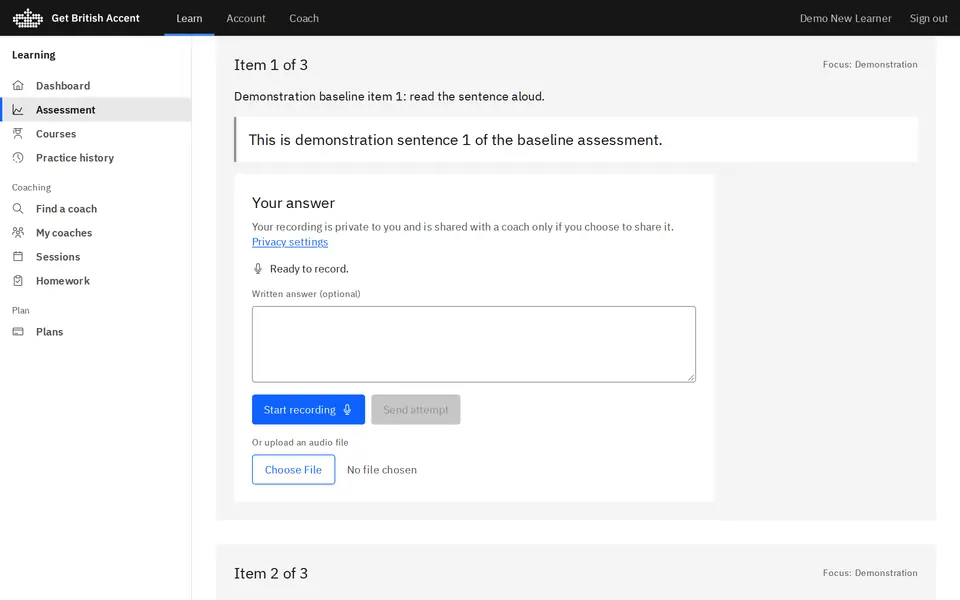
In the baseline assessment, read the published prompts aloud and record your responses in the app. That first attempt stays in your history as a reference to listen back to, until you delete it or the app’s retention period ends.
The baseline assessment is free when it is published. Recording is not switched on in the app yet, so baseline answers are written for now.

Write down a situation that matters to you, so your practice has a purpose beyond getting through a lesson.
Browse courses as they are published. Work through the available material rather than collecting another folder of unrelated clips.
No courses have been published yet.
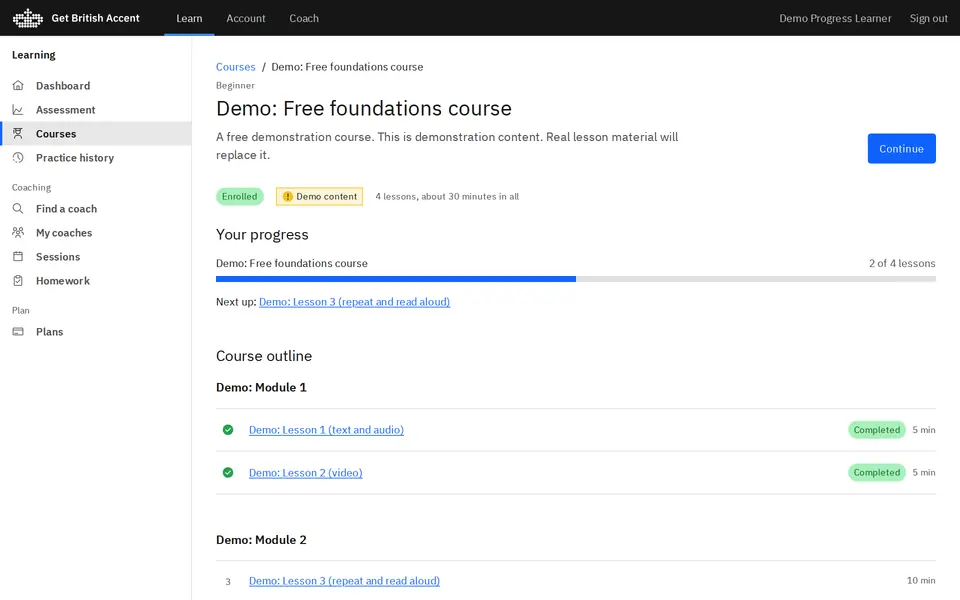
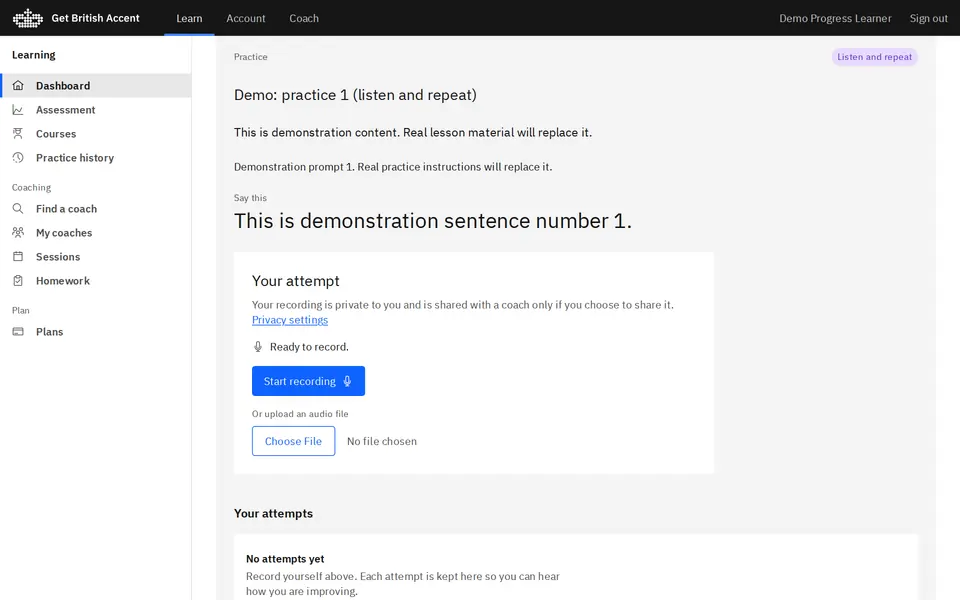
Read the lesson’s explanation, use any listening material it includes and practise aloud. A lesson gives you a defined place to put your attention before you move on.
Listen once for the whole phrase. Listen again for the feature the lesson highlights. Pause and replay as you need to. You are practising attention as well as speech.
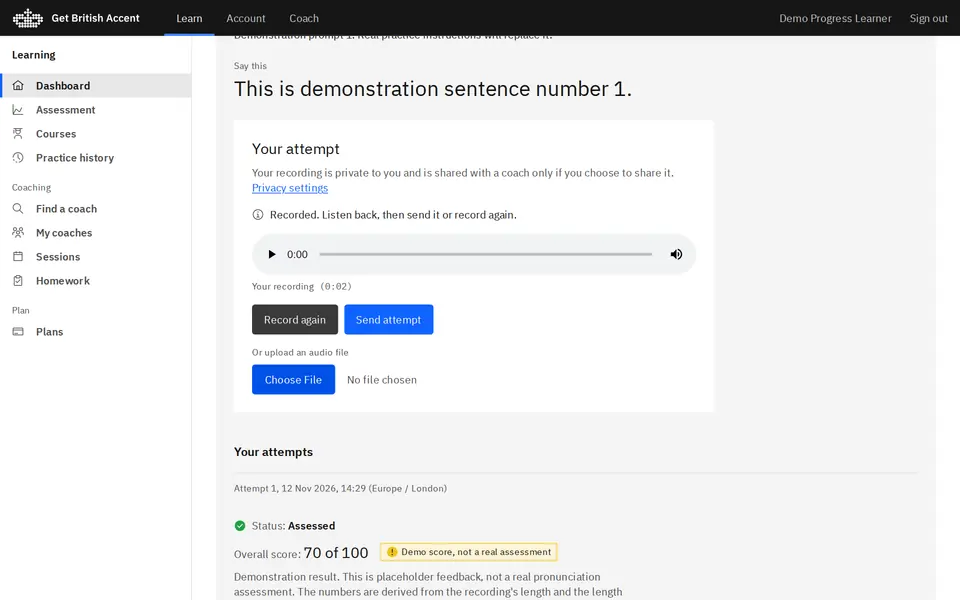
Record your attempt in the app and play it back. You may notice something you want to keep, something to adjust, or a phrase you would like to try once more.
The app does not score your pronunciation automatically. Recording is not switched on in the app yet, so attempts cannot be recorded or played back for now.
You do not need every recording to be your best. Use the next attempt to explore one change, rather than trying to perfect every part of your speech at once.
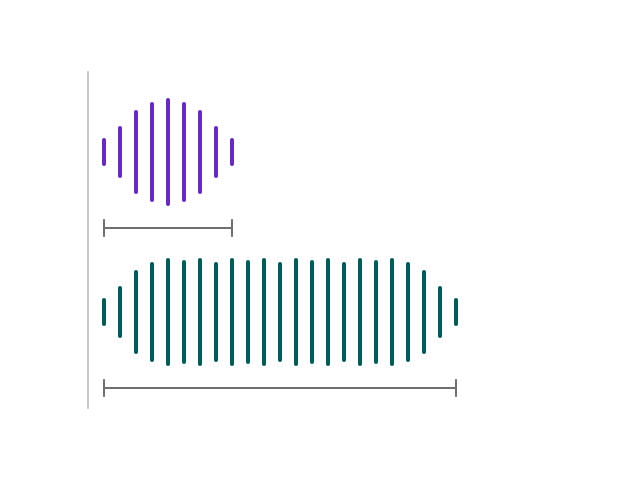
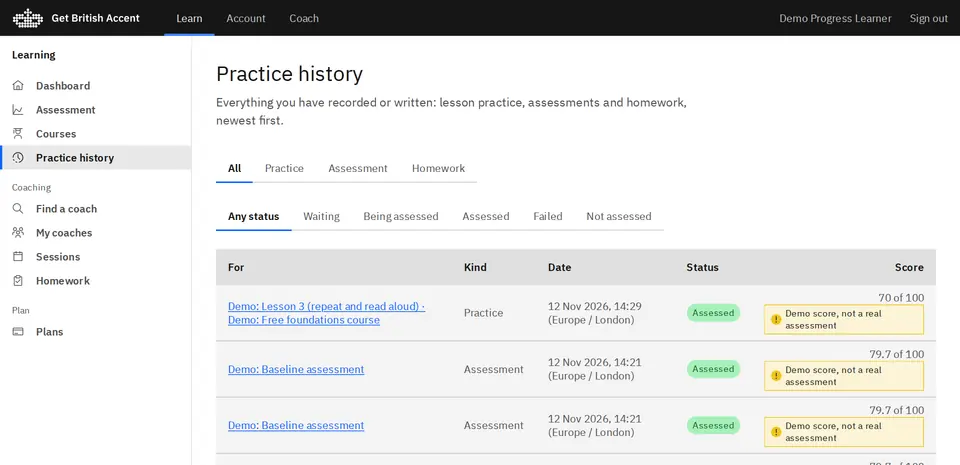
Your recording history lets you listen back across your practice. Recordings remain until you delete them or the app’s retention period ends. The app’s Privacy and data page shows the current retention period.
Recording is not switched on in the app yet; for now your history lists written answers.
When you enrol in a course, the app remembers the last lesson you opened and the lessons you mark complete, so you can resume from your dashboard.
The app has not opened to the public yet.

A short walkthrough: open a lesson, use its material, record an attempt and listen back.
Recording is not switched on in the app yet.

Create your account, see the available material and begin with the free baseline assessment when it is published.
The app at app.getbritishaccent.com has not opened to the public yet.You can decide about courses and coaching separately.

Optional human coaching adds conversation and feedback to independent practice. In the app you can browse coaches from workspaces the platform has approved, and see the times they publish.
No coaches are listed in the app yet, and coaching sessions cannot be paid for yet.
A phrase you keep repeating. A presentation opening. A question about an example. Discuss your goal with a coach and check that their approach suits what you need.
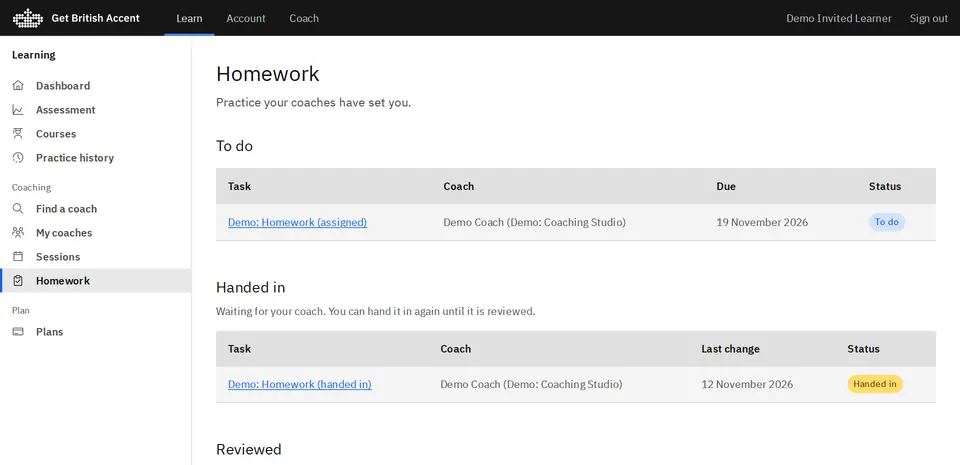
A coach can set homework and give feedback on what you submit. Use that work to continue the conversation between sessions.
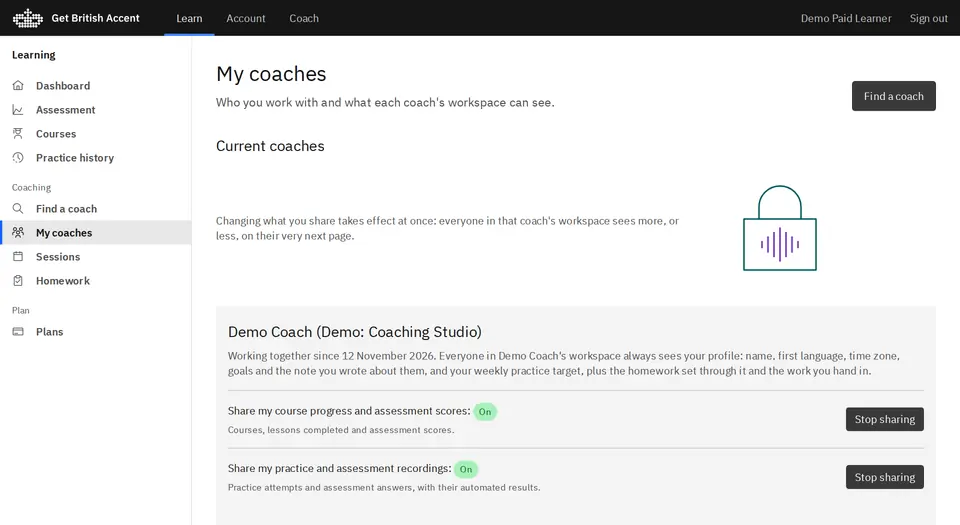
You choose separately whether to share your course progress, and your practice and assessment answers, with a coach’s workspace, and you can switch either off at any time. Everyone in that workspace sees what you share, not only your coach.
The app has not opened to the public yet.

Your profile, weekly hours, sessions, students, homework and written feedback, in one place. Each workspace is reviewed before learners can find you, and you set your own rate within the platform’s range.
The app has not opened to the public yet.
There is no promised date for a new accent, no guaranteed career outcome and no requirement to sound native. What you can do is set a goal, practise deliberately and review your attempts.
Creating an account is free. Courses are offered as they are published. Check the app for current availability, access conditions and any published prices. Coaching is optional and subject to availability.
The app at app.getbritishaccent.com has not opened to the public yet. This site describes how practice in the app works.

No. You choose what you want to practise and how you want to sound. Your starting accent is part of your experience, not a defect to hide.
You do not need perfect speech to practise pronunciation. Read the descriptions and levels of published courses, and try any free-preview lessons, to decide whether the material suits your current English.
No. Coaching is optional. You can use the independent practice material available to your account and consider coaching separately.
It gives you a baseline exercise to return to. The app does not score your pronunciation automatically: your answers are saved for you to return to and, if you choose, to share with a coach for feedback.


Create a free account. Explore what is available. When the baseline assessment is published, begin with it and build your practice from there.
The app at app.getbritishaccent.com has not opened to the public yet.Courses are offered as they are published; coaching is optional.